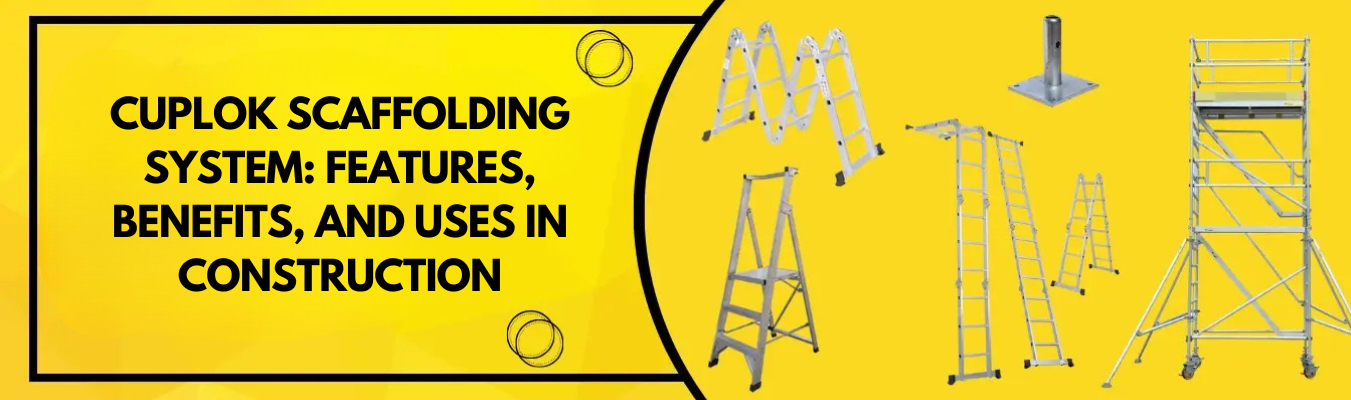
Cuplok Scaffolding System: Features, Benefits, And Uses In Construction

Cuplok Scaffolding System: Features, Benefits, And Uses In Construction

Introduction

The cuplok scaffolding system has become a popular choice in modern construction. Contractors across Pakistan prefer it because it offers strength, flexibility, and quick assembly. As construction projects grow in complexity, builders need reliable scaffolding systems that improve efficiency and safety.

Therefore, many companies now use the cuplok system instead of traditional scaffolding methods. It not only saves time but also ensures strong structural support.

In this guide, you will learn about the features, benefits, and uses of the cuplok scaffolding system in construction.


What Is Cuplok Scaffolding System?

The cuplok scaffolding system is a modular scaffolding solution that uses a unique locking mechanism. It includes vertical standards and horizontal ledgers that connect through a cup-and-blade system. As a result, workers can assemble and dismantle the structure quickly without complicated tools.

Moreover, this system provides high stability, which makes it suitable for both small and large construction projects.


Key Features Of Cuplok Scaffolding System


1. Unique Locking Mechanism

First, the cuplok system uses a simple cup-and-blade locking method. Workers can lock multiple components in one action.

As a result, this feature speeds up installation and reduces labor effort.


2. High Load Capacity

In addition, cuplok scaffolding offers excellent load-bearing strength. It can support heavy construction materials and workers at height.

Therefore, contractors use it for demanding projects.


3. Quick Assembly And Dismantling

Furthermore, workers can assemble the cuplok system faster than traditional scaffolding. They do not need bolts or nuts, which simplifies the process.

Because of this, construction teams save both time and labor costs.


4. Versatile Design

Another important feature is its flexibility. You can use the cuplok system in different structures and layouts.

For example, it works well for curved buildings, circular tanks, and complex structures.


5. Durable And Long-Lasting

Most cuplok systems use high-quality steel with protective coatings. As a result, they resist wear and harsh weather conditions.

Therefore, they last longer and provide better value over time.


Benefits Of Cuplok Scaffolding System


1. Improved Safety

Safety plays a major role in construction. The cuplok system provides strong joints and stable platforms.

As a result, it reduces the risk of accidents on-site.


2. Time Efficiency

Because of its quick locking system, workers complete setup faster. Consequently, projects move forward without delays.


3. Cost-Effective Solution

Although the initial investment may seem higher, the system reduces labor costs and maintenance expenses. Therefore, it becomes cost-effective in the long run.


4. Reduced Labor Requirement

Since the system is easy to assemble, fewer workers are needed. In addition, it minimizes manual effort and increases productivity.


5. Multi-Purpose Use

Contractors can use cuplok scaffolding for different applications. As a result, it becomes a versatile solution for various industries.
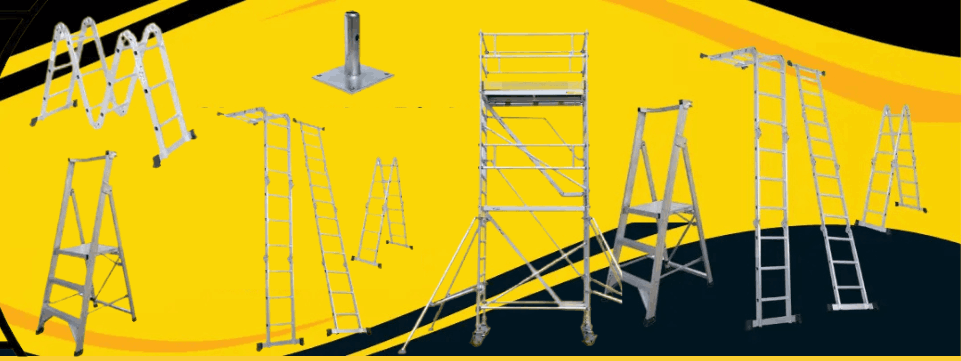

Cuplok Scaffolding System: Features, Benefits, And Uses In Construction

Uses Of Cuplok Scaffolding In Construction


1. Building Construction

Builders widely use cuplok scaffolding for residential and commercial projects. It provides stable platforms for workers at different heights.


2. Bridge And Infrastructure Projects

Engineers use this system in bridge construction because it handles heavy loads efficiently.


3. Industrial Maintenance

Industries rely on cuplok scaffolding for maintenance and repair work. It allows safe access to complex structures.


4. Formwork Support

Contractors use cuplok systems to support slabs and beams during concrete work. Therefore, it plays a key role in structural support.


5. Circular And Complex Structures

The flexible design allows use in tanks, chimneys, and curved buildings. As a result, it adapts to challenging project requirements.


Why Cuplok Scaffolding Is Popular In Pakistan

In Pakistan, construction projects require reliable and efficient solutions. Therefore, contractors prefer cuplok scaffolding due to its strength and ease of use.

Moreover, it performs well in different weather conditions, including humid environments like Karachi. As a result, it offers long-term durability and consistent performance.

Because of these advantages, the cuplok system continues to gain popularity in the local construction industry.


FAQs

1. What makes cuplok scaffolding different from traditional systems?

The cuplok system uses a unique locking mechanism, which allows faster assembly and stronger connections.


2. Is cuplok scaffolding safe to use?

Yes, it provides high stability and secure joints. Therefore, it ensures safe working conditions when used correctly.


3. Where is cuplok scaffolding commonly used?

It is used in building construction, bridges, industrial maintenance, and formwork support.


4. Is cuplok scaffolding expensive?

It may cost more initially. However, it saves money over time due to durability and reduced labor costs.


5. Can cuplok scaffolding be reused?

Yes, it is highly durable and designed for repeated use in multiple projects.


Conclusion

The cuplok scaffolding system offers a modern and efficient solution for construction projects. It combines strength, safety, and flexibility, which makes it suitable for various applications.

Because of its quick assembly, high load capacity, and long-term durability, contractors prefer it over traditional scaffolding systems. Moreover, it improves productivity and reduces overall project costs.

In conclusion, if you want a reliable and cost-effective scaffolding solution in Pakistan, the cuplok system is an excellent choice for both small and large construction projects.
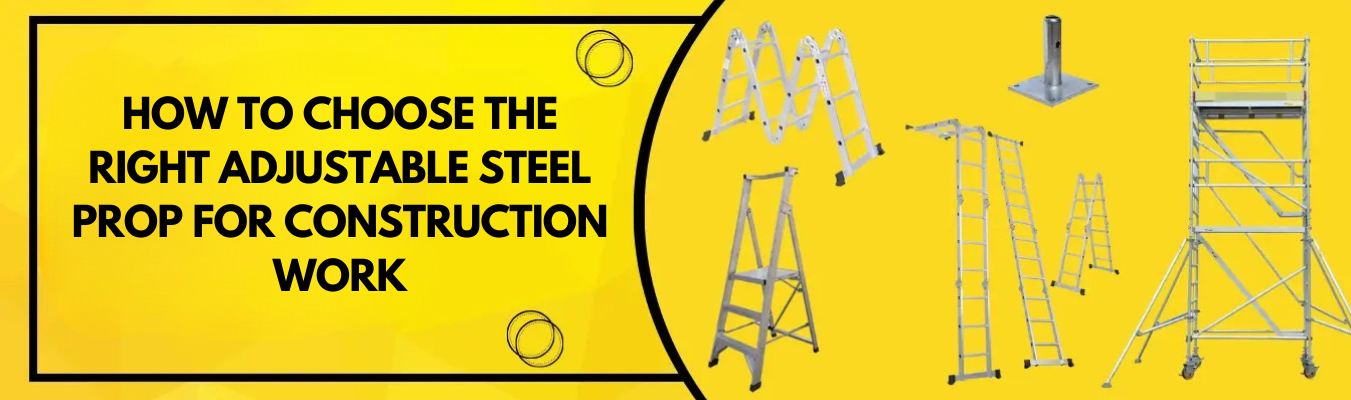
How to choose the right adjustable steel prop for construction work

How to choose the right adjustable steel prop for construction work

Introduction

Choosing the right adjustable steel prop plays a crucial role in construction safety and efficiency. In Pakistan, contractors handle projects of different sizes, so they must select equipment carefully.

Adjustable steel props support slabs, beams, and temporary structures during construction. Therefore, selecting the correct prop improves stability and prevents structural issues.

In this guide, you will learn how to choose the right adjustable steel prop for construction work based on key factors such as load capacity, height, and safety.


What Is An Adjustable Steel Prop?

An adjustable steel prop is a vertical support tool that workers use to carry temporary loads. It includes an inner tube, outer tube, locking pin, and base plates. As a result, workers can easily adjust the height according to project needs.

Builders commonly use steel props for:

  • slab support
  • beam support
  • temporary structural reinforcement

Moreover, contractors prefer these props because they are durable, reusable, and easy to handle.


Key Factors To Consider When Choosing A Steel Prop


1. Load Capacity

First, you must check the load capacity before selecting any steel prop. Each prop supports a specific weight, so choosing the correct one prevents failure.

  • Light-duty props work best for small projects
  • Medium-duty props suit standard construction
  • Heavy-duty props handle large structures

Therefore, always match the load capacity with your project requirements.


2. Height Adjustment Range

Next, consider the height range of the steel prop. Different projects require different height levels.

You should:

  • measure the required height first
  • choose a flexible adjustment range
  • avoid maximum extension for safety

As a result, proper height selection improves both efficiency and safety.


3. Material And Finish

After that, focus on the material quality. Most steel props use strong carbon steel, which ensures durability.

You can choose between:

  • Galvanized steel props → resist rust and suit outdoor use
  • Painted steel props → cost-effective for indoor projects

In cities like Karachi, contractors prefer galvanized props because they perform better in humid conditions.


4. Safety Features

In addition, always check the safety features before purchasing. Strong safety components reduce the risk of accidents.

Look for:

  • secure locking pins
  • anti-slip base plates
  • stable adjustment systems

Because of these features, workers can operate safely and confidently on-site.


5. Type Of Steel Prop

Furthermore, you should select the correct type based on your project.

Common Types Include:

  • Acrow props for general construction
  • Shoring props for slab and beam support
  • Push-pull props for alignment work

Each type serves a specific purpose, so choose accordingly.

4. Safety Features

Safety should always be a top priority when choosing construction equipment.

Look for:

  • strong locking pins
  • anti-slip base plates
  • secure adjustment mechanisms
  • stable design

These features help prevent accidents and ensure safe operations on-site.


5. Type Of Steel Prop

Different types of steel props are designed for specific applications.

Common Types Include:

  • Acrow props → most widely used for general construction
  • Shoring props → used for slab and beam support
  • Push-pull props → used for alignment and bracing

Each type serves a different purpose, so choose according to your project needs.


6. Ease Of Installation And Handling

Adjustable steel props should be easy to install and remove.

Modern props feature:

  • quick height adjustment systems
  • lightweight handling compared to older methods
  • simple locking mechanisms

This reduces labor time and increases productivity.


7. Durability And Reusability

Steel props are designed for long-term use. High-quality props can be reused in multiple projects, making them cost-effective.

Durable props:

  • resist wear and tear
  • maintain load capacity over time
  • reduce replacement costs

6. Ease Of Installation

Besides that, ease of installation also matters. Quick installation saves time and reduces labor costs.

Modern steel props offer:

  • simple adjustment systems
  • fast setup and removal
  • user-friendly design

Therefore, contractors complete projects faster with better efficiency.


7. Durability And Reusability

Finally, consider durability. High-quality steel props last longer and perform better over time.

Durable props:

  • resist damage
  • maintain strength
  • reduce replacement costs

As a result, they provide better long-term value.


Common Mistakes To Avoid

Many contractors make simple mistakes when selecting steel props. However, you can avoid them with proper planning.

Avoid the following:

  • choosing low-quality materials
  • ignoring load capacity
  • using damaged props
  • installing props incorrectly

Otherwise, these mistakes can lead to serious safety risks.
Best Uses Of Adjustable Steel Props

Adjustable steel props serve multiple purposes in construction. For example, workers use them in:

  • slab and formwork support
  • building construction
  • bridge projects
  • maintenance work


FAQs

1. What is the standard load capacity of a steel prop?

Steel props usually support different loads depending on their type. Therefore, always check specifications before use.


2. Which steel prop is best for heavy construction?

Heavy-duty steel props work best for large projects because they handle higher loads.


3. Can steel props be used outdoors?

Yes, you can use galvanized steel props outdoors since they resist rust and weather damage.


4. How do you adjust a steel prop?

Workers adjust steel props using a pin or screw system to reach the required height.


5. Are adjustable steel props reusable?

Yes, you can reuse steel props multiple times, which makes them cost-effective.


Conclusion

Choosing the right adjustable steel prop for construction work ensures safety and efficiency. First, you should evaluate load capacity, height range, and material quality. Then, you must consider safety features and durability.

Aluminium scaffolding may offer flexibility, but steel props provide strong vertical support for construction. Therefore, selecting the right prop helps you complete projects safely and efficiently.

In the end, proper planning and the right equipment lead to better construction results and long-term cost savings.

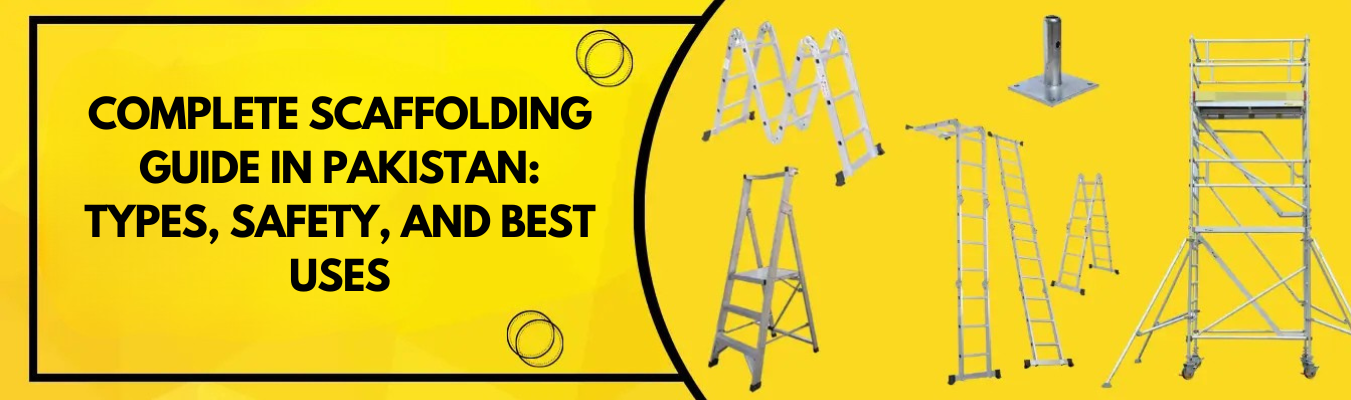
Complete scaffolding guide in pakistan: types, safety, and best uses

Complete scaffolding guide in pakistan: types, safety, and best uses

Introduction

Scaffolding plays a vital role in the construction industry of Pakistan. It provides workers with safe access to elevated areas and helps complete projects efficiently. Whether it is a small residential building or a large commercial project, choosing the right scaffolding system is essential.

In Pakistan, different types of scaffolding are used depending on the nature of the work. Each type offers specific benefits, safety features, and applications.

This complete scaffolding guide in Pakistan will help you understand the types, safety measures, and best uses so you can select the right solution for your project.


What Is Scaffolding?

Scaffolding is a temporary structure used to support workers and materials during construction, repair, or maintenance work. It ensures that workers can safely reach heights and perform tasks with stability.

Scaffolding is commonly used in:

  • building construction
  • painting and plastering
  • electrical and maintenance work
  • industrial projects

Types Of Scaffolding Used In Pakistan

Different projects require different scaffolding systems. Below are the most commonly used types in Pakistan.


1. Supported Scaffolding

Supported scaffolding is the most common type. It is built from the ground up using frames, poles, and platforms.

Best uses:

  • residential construction
  • commercial buildings
  • general maintenance

2. Mobile Scaffolding

Mobile scaffolding comes with wheels, making it easy to move from one place to another. It is often made of aluminium.

Best uses:

  • indoor work
  • painting and cleaning
  • electrical installations

3. Suspended Scaffolding

Suspended scaffolding hangs from the top of a building using ropes or chains. It allows workers to move up and down easily.

Best uses:

  • window cleaning
  • exterior building maintenance
  • high-rise repairs

4. Steel Scaffolding

Steel scaffolding is strong and durable. It is widely used in heavy construction projects where high load capacity is required.

Best uses:

  • infrastructure projects
  • high-rise buildings
  • industrial construction

5. Aluminium Scaffolding

Aluminium scaffolding is lightweight, rust-resistant, and easy to assemble. It is becoming increasingly popular in Pakistan.

Best uses:

  • maintenance work
  • quick projects
  • indoor and outdoor use

Scaffolding Safety Guidelines In Pakistan

Safety is the most important factor when using scaffolding. Proper precautions can prevent accidents and improve work efficiency.

Essential Safety Tips

  • Always inspect scaffolding before use
  • Use proper safety equipment like helmets and harnesses
  • Ensure stable ground support
  • Do not overload the scaffolding
  • Follow proper assembly and dismantling procedures

Why Safety Matters

Ignoring safety standards can lead to serious injuries and project delays. Therefore, contractors must follow proper guidelines and use high-quality scaffolding systems.


Best Uses Of Scaffolding In Pakistan

Scaffolding is used across multiple industries in Pakistan due to its versatility.

Common Applications

  • construction of houses and buildings
  • maintenance and repair work
  • industrial plant operations
  • bridge and infrastructure development
  • painting and cleaning services

How To Choose The Right Scaffolding

Selecting the right scaffolding depends on your project needs.

Consider The Following Factors

  • type of project
  • required height
  • load capacity
  • budget
  • ease of assembly

For example, aluminium scaffolding is ideal for quick and light tasks, while steel scaffolding is better for heavy-duty projects.


Advantages Of Modern Scaffolding Systems

Modern scaffolding systems offer several benefits compared to traditional methods.

  • improved safety
  • faster installation
  • better mobility
  • long-term durability
  • cost efficiency

These advantages make scaffolding an essential part of modern construction in Pakistan.


FAQs

1. What is the most commonly used scaffolding in Pakistan?

Supported scaffolding and steel scaffolding are the most commonly used types in Pakistan.

2. Which scaffolding is best for small projects?

Mobile or aluminium scaffolding is best for small and quick projects.

3. Is scaffolding safe to use?

Yes, scaffolding is safe when proper safety guidelines and equipment are used.

4. What is the difference between aluminium and steel scaffolding?

Aluminium is lightweight and rust-resistant, while steel is stronger and suitable for heavy loads.

5. Can scaffolding be used for indoor work?

Yes, mobile and aluminium scaffolding are ideal for indoor applications.


Conclusion

Scaffolding is a crucial component of construction projects in Pakistan. Understanding the different types, safety measures, and applications helps contractors make better decisions.

Each type of scaffolding serves a specific purpose. Aluminium scaffolding is perfect for lightweight and quick tasks, while steel scaffolding is suitable for heavy-duty construction.

By following proper safety guidelines and selecting the right system, you can ensure efficiency, durability, and worker safety in every project.